
Most people visiting Loutraki, Greece see the promenade, the spa, and maybe the Corinth Canal on the way out. We send our guests a very different list. These are the places we actually go ourselves — specific enough to be useful, honest enough to skip the ones that aren't worth your time.
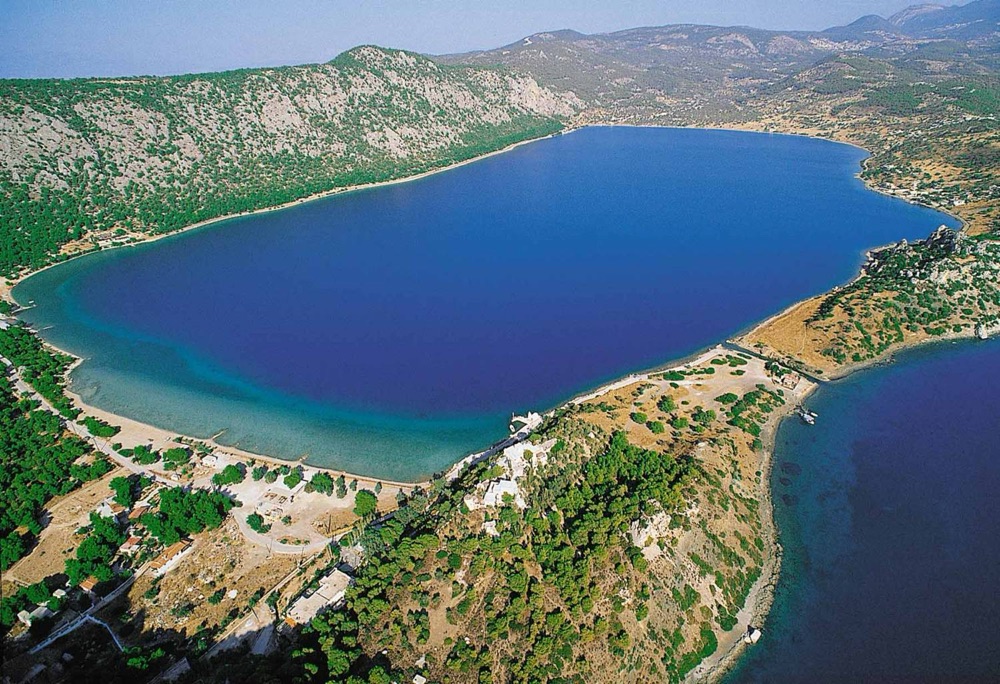
Vouliagmeni Lagoon — not what you think it is
Most people call it a lake. It is actually a saltwater lagoon connected to the sea, which is why the water is so dense, so clear, and stays warmer than the open sea well into October. The lagoon sits 16 km west of Loutraki along a coastal road that is itself worth the drive — pine forest on one side, sea on the other.
The beach on the lagoon side is sandy and shallow, good for children. The open sea side of the peninsula is rockier and quieter. On the shore, Ypanema beach bar is a good stop in the early afternoon — good drinks, good shade. Arrive before noon in summer or you will struggle for parking.
Mylokopi — two coves, no tourists
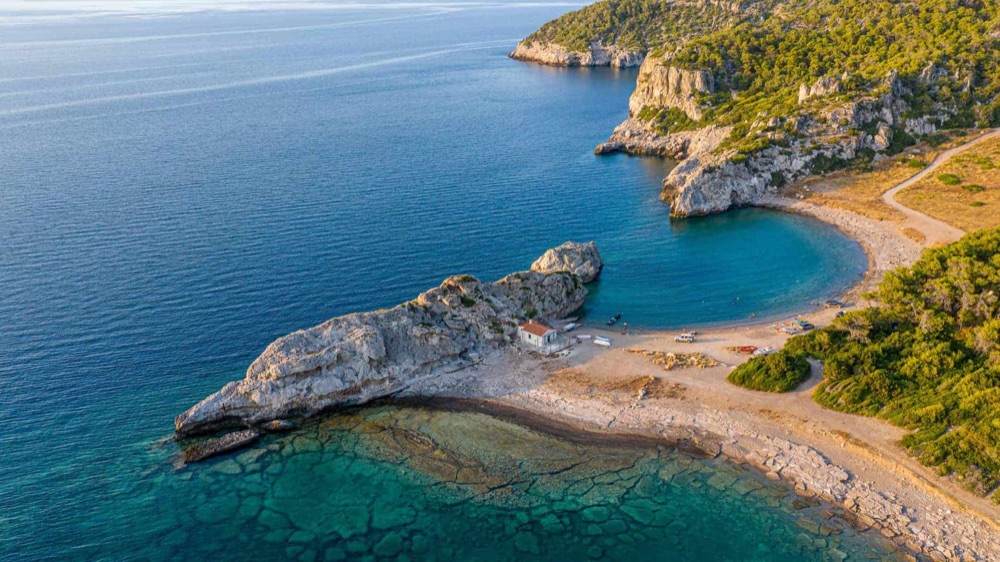
Past the lagoon, at the end of the Perachora peninsula, the road becomes a dirt track and the tourists disappear entirely. Mylokopi is actually a twin beach — two perfect coves side by side, one sandy, one rocky, both with water that shifts from pale turquoise to deep blue-green as it deepens. Almost no facilities, rarely more than a handful of people even in peak season.
It is one of the best spots in Corinthia for snorkelling and diving. You can drive — last kilometre is rough track — or better yet, rent a boat from Loutraki harbour and arrive by sea. The approach from the water is spectacular and you can combine it with the Cave of the Seal and Heraion in a single day.
Heraion of Perachora — go late, not early
The ancient sanctuary of Hera at the tip of the Perachora peninsula is a genuine highlight — ruins of a temple, an ancient lighthouse, and a sheltered cove with water so clear you can see the submerged remains from above. The setting is more impressive than anything at the Corinth Canal and most visitors walk straight past it.
The drive takes about 30 minutes from Loutraki on a winding road through olive groves. Bring water and food — there is nothing at the site. The best time to go is late afternoon: the light goes golden, the heat drops, and by 6pm you will likely have the whole headland to yourself.
The cove below the ruins has deep blue water that is excellent for snorkelling and cliff jumping. Alternatively, come by boat from Loutraki harbour — it is a natural stop on a day trip that also takes in Mylokopi and the Cave of the Seal.
Cave of the Seal — boat access only
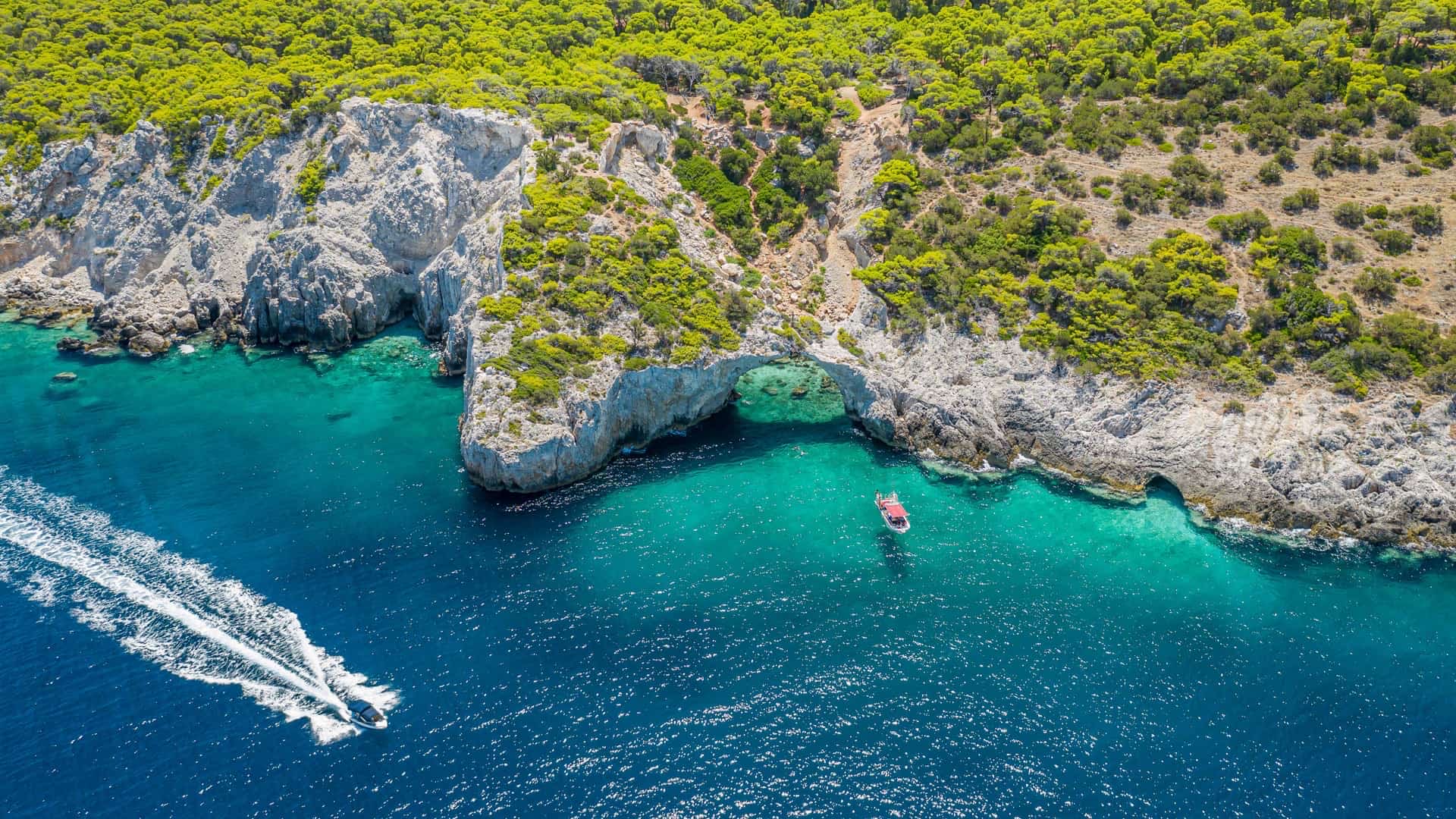
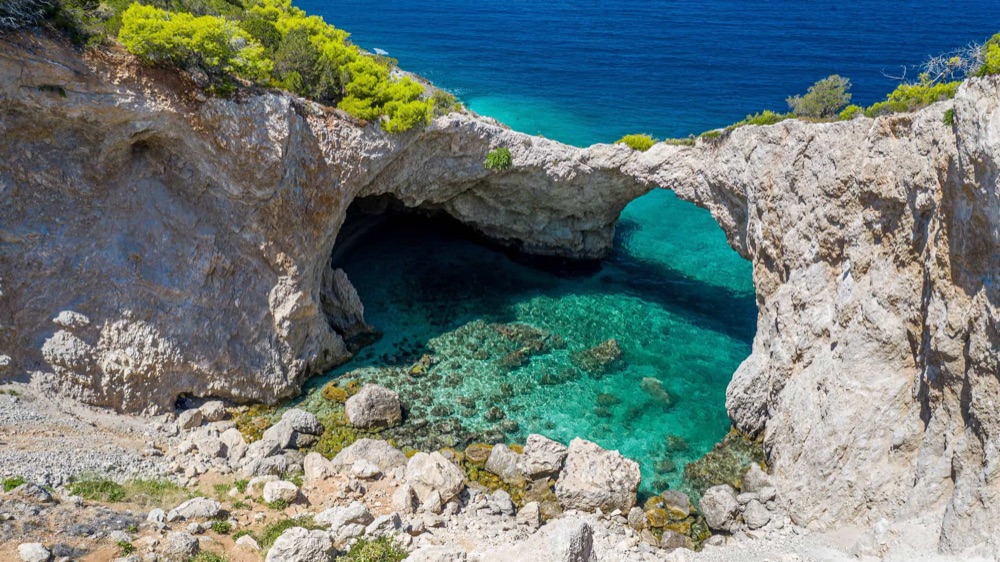
A few minutes by boat past the Heraion headland, the coastline opens into something genuinely dramatic: a natural rock arch over turquoise water, and behind it a hidden sea cave with crystal-clear water inside. This is the Cave of the Seal — named after the monk seals that occasionally still visit — sitting opposite the Alcyonides Islands with no road access whatsoever.
The only way in is by boat. Rent one from Loutraki harbour (the staff there know exactly where it is) and combine it with Mylokopi and Heraion for a full day on the water. Bring snorkelling gear. The cliff jumping off the arch is not for everyone, but it is there if you want it.
Scorpina and Flabouro — the sunset spots
If you ask a local where to watch the sunset, they will not say the promenade. The coastline west of Loutraki has several rocky points with unobstructed views over the Saronic Gulf — Scorpina and Flabouro among them. These are not organised spots with bars and sunbeds. They are quiet, a little wild, and the views are genuinely spectacular. Take something to drink and go an hour before sunset.
A car (or a boat) makes this area
You can walk Loutraki's promenade without one. But Mylokopi, Perachora, the sunset spots — all require a car, and the Cave of the Seal requires a boat. Renting either for even a single day unlocks a completely different experience of this coastline. If you are staying in one of our properties and need a recommendation for local car or boat hire, ask us directly.